
Radio Intervention
“Radio intervention” typically refers to Interventional Radiology (IR), a medical specialty that uses imaging guidance to perform minimally invasive procedures for diagnosis and treatment. These procedures involve using catheters, needles, and other small instruments, guided by imaging like X-ray, CT scans, and ultrasound, to reach specific areas within the body.
Radio Intervention
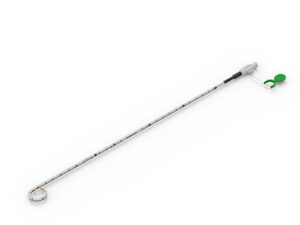
This catheter enables both internal and external biliary drainage in patients with biliary obstruction. The pigtail loop is designed for secure placement within the duodenum, while the side holes facilitate effective bile drainage across strictured segments of the bile duct. A hydrophilic coating on the distal 10 cm of the catheter facilitates smooth insertion and accurate positioning.
MODEL:Internal-External Biliary Drainage Set
Radio Intervention
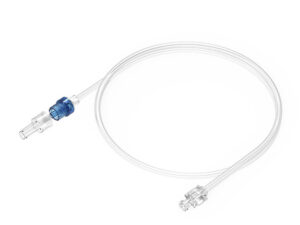
The extension line is specially designed to ensure safe, contrast media administration during angiographic procedures.
MODEL: Extension Line (300 Psi)

Radio Intervention
This biliary drainage catheter is used to remove excess bile in patients with bile duct obstruction. The mini pigtail configuration facilitates easy and secure positioning within the biliary ducts.
MODEL: External Biliary Drainage Set
Radio Intervention
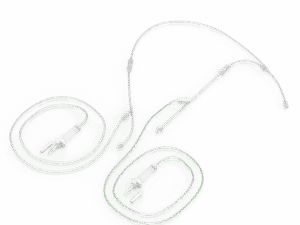
The MRS Tube System is a single-use, double-head tube system designed for contrast media and saline solution injection during CT and MRI examinations. This system enhances image quality and patent .safety by ensuring precise and consistent contrast delivery

Radio Intervention
The multipurpose drainage catheter is designed for efficient drainage of fluids from various body cavities and organs. Widely used in interventional radiology and surgical procedures, it is suitable for applications such as abscess drainage, pleural effusion drainage, and ascites management. A hydrophilic coating on the distal 10 cm of the catheter facilitates smooth insertion and accurate positioning
Radio Intervention
A biliary drainage catheter is a medical device used to drain bile from the biliary system in cases o excessive accumulation of bile due to obstruction of the ducts.
MODEL:
External Biliary Drainage Set
Radio Intervention
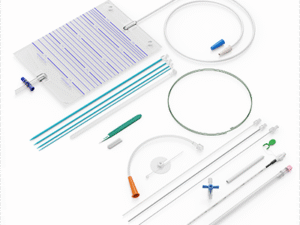
The percutaneous nephrostomy set is used to drain urine from the renal pelvis in patients with hydronephrosis caused by obstruction, ureteral stones, or pelvic inflammation. It may also be used to administer medication or to measure urine output in the upper urinary tract. A hydrophilic coating is applied to the distal 10 cm of the catheter to facilitate insertion and positioning.
MODEL:Percutaneous Nephrostomy Set - Full (Hydrophilic-Coated)
Radio Intervention
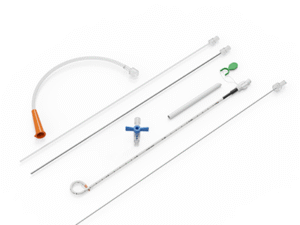
The Percutaneous Nephrostomy Set is used to drain urine from the renal pelvis in patients with hydronephrosis caused by obstruction, ureteral stones, or pelvic inflammation. It may also be used to introduce medication or to measure urine output in the upper urinary tract.
Radio Intervention
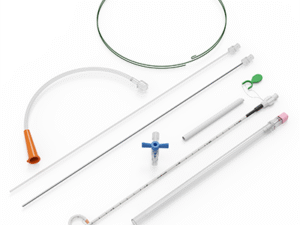
The Percutaneous Nephrostomy Set is used to drain urine from the renal pelvis in patients with hydronephrosis caused by obstruction, ureteral stones, or pelvic inflammation. It may also be used to introduce medication or to measure urine output in the upper urinary tract.